

Cooling Apparel Glossary: UPF, Wicking, Breathability, and Sweat-Activated Cooling
UPF. Moisture-wicking. Breathable. Quick-dry. Temperature-regulating. Sweat-activated cooling.
If you have shopped for clothing designed for hot weather, outdoor activity, travel, work, golf, walking, or everyday summer comfort, you have probably seen several of these terms on the same product page.
The problem is that they do not all mean the same thing.
A shirt can be moisture-wicking without offering sweat-activated temperature regulation. A garment can be breathable without having a UPF rating. Quick-dry performance describes something different from moisture-wicking, even though the two features often work together.
This cooling apparel glossary explains the most useful performance-apparel terms in plain language so you can understand what each feature does, how the features relate to one another, and what to look for when choosing clothing for heat, sweat, sun, humidity, and movement.
This guide is part of the Arctic Cool Staying Cool Hub, our central resource for hot-weather clothing, fabric technology, temperature regulation, sun coverage, sweat, travel, outdoor activity, and everyday comfort.
Cooling Apparel Terms at a Glance
UPF: Ultraviolet Protection Factor. It describes how much ultraviolet radiation a fabric allows to pass through to the skin covered by the garment.
UPF 50+: A high level of fabric sun protection. A UPF 50 fabric allows approximately 1/50th of UV radiation to pass through, meaning it blocks about 98% from reaching covered skin.
Moisture-wicking: A fabric’s ability to move perspiration away from the skin and spread it through the material so moisture can dry more efficiently.
Breathability: How easily air and moisture can move through or around a fabric. More breathable clothing generally feels less enclosed during heat and movement.
Quick-dry: A fabric’s ability to release moisture and dry efficiently after becoming damp.
Sweat-activated cooling: Fabric technology designed to use moisture and airflow as part of a cooler-feeling, temperature-regulating wearing experience.
Temperature regulation: Features designed to support comfort as body heat, moisture, airflow, and environmental conditions change.
HydroFreeze X™: Arctic Cool’s sweat-activated temperature-regulating technology, designed to work with perspiration, movement, airflow, and evaporation.
ActiveWick: Arctic Cool’s moisture-management technology designed to pull moisture away from the skin and disperse it throughout the garment.
Evaporation: The process of liquid moisture changing into vapor. Evaporation is one of the ways perspiration helps the body release heat.
Four-way stretch: Fabric engineered to stretch in multiple directions so a garment can move more naturally with the body.
Why Performance-Apparel Terms Matter
These features solve different parts of the hot-weather clothing problem.
Consider a humid afternoon walk.
You may want the shirt to:
- Allow air to circulate
- Move perspiration away from the skin
- Dry after becoming damp
- Move comfortably through the shoulders and torso
- Provide sun coverage where the fabric covers the body
- Support temperature-regulating comfort as heat builds
No single term describes all of those functions.
That is why a strong hot-weather garment typically combines several complementary features instead of relying on one performance claim.
For the larger fabric picture, read Cooling Fabrics Explained.
What Does UPF Mean in Clothing?
UPF stands for Ultraviolet Protection Factor.
It is a rating used for fabrics and garments to describe how much ultraviolet radiation can pass through the material.
For example, a UPF 50 fabric allows approximately 1/50th of UV radiation to pass through. In practical terms, that means the rated fabric blocks about 98% of UV radiation from reaching the skin it covers.
What Does UPF 50+ Mean?
UPF 50+ indicates a high level of ultraviolet protection from the rated fabric.
The important phrase is skin covered by the fabric.
A long sleeve can cover more skin than a short sleeve, but the UPF rating does not protect areas that remain uncovered.
Does UPF Clothing Replace Sunscreen?
No. UPF-rated clothing protects the areas covered by the rated fabric.
Sunscreen remains important for exposed areas such as the face, neck, hands, and any uncovered portions of the arms or legs.
Headwear, shade, sunglasses, and appropriate breaks from extended direct sun can also be part of a broader sun-protection routine.
Is UPF the Same as Breathability?
No.
UPF describes ultraviolet protection. Breathability describes airflow.
A useful hot-weather garment may combine UPF protection with lightweight, breathable, moisture-wicking, and quick-dry fabric so additional coverage remains practical in warm conditions.
For a deeper explanation, read UPF 50 Clothing for Hot Weather.
What Does Moisture-Wicking Mean?
Moisture-wicking means the fabric is designed to move perspiration away from the skin and distribute it through the material.
Instead of allowing moisture to remain concentrated in one place, a moisture-wicking material helps spread it across a larger surface area.
That can help the moisture dry more efficiently when airflow and environmental conditions allow.
What Moisture-Wicking Does
- Helps move perspiration away from the skin
- Helps spread moisture through the fabric
- Supports more efficient drying
- Can reduce the heavy feeling associated with concentrated dampness
- Works especially well alongside breathable and quick-dry construction
What Moisture-Wicking Does Not Do
- It does not stop the body from sweating.
- It does not guarantee that the shirt will remain completely dry.
- It does not automatically mean a shirt is temperature-regulating.
- It does not describe UV protection.
What Is ActiveWick?
ActiveWick is Arctic Cool’s moisture-management technology.
It is designed to pull moisture away from the skin and disperse that moisture through the garment, making moisture movement one part of the overall HydroFreeze X™ performance system.
For a closer comparison between basic moisture management and temperature-regulating performance, read Cooling vs. Moisture-Wicking.
What Does Breathable Fabric Mean?
Breathability describes how readily air and moisture can move through or around a material.
This matters in warm conditions because airflow can help a garment feel less enclosed and can support evaporation after perspiration reaches the fabric.
Breathability becomes especially noticeable during:
- Walking
- Golf
- Pickleball
- Travel
- Gardening
- Yard work
- Outdoor jobs
- Warm commutes
- Humid weather
- Long days outside
Is Breathability the Same as Moisture-Wicking?
No.
Breathability primarily relates to airflow and the movement of heat and moisture through the material.
Moisture-wicking describes how fabric moves perspiration away from the skin.
The two features work well together: wicking helps move the moisture, while breathability helps create conditions that support airflow and evaporation.
What Does Quick-Dry Mean?
Quick-dry describes how efficiently a fabric releases moisture and recovers after becoming damp.
This is related to moisture-wicking, but the terms are not interchangeable.
Think of the process this way:
- Moisture-wicking: helps move perspiration.
- Breathability: supports airflow.
- Quick-dry: helps the fabric release moisture and recover.
Quick-dry performance matters when the hot portion of your day ends before the rest of your schedule does.
For example, you may walk across a hot parking lot and then spend several hours inside a restaurant. You may finish a round of golf and drive home. You may complete yard work and then run an errand.
A shirt that dries efficiently can remain more wearable through those transitions.
What Is Sweat-Activated Cooling?
Sweat-activated cooling is fabric technology designed to respond when moisture interacts with the garment.
Instead of treating perspiration only as something to absorb, sweat-activated technology uses moisture as part of a temperature-regulating system.
At Arctic Cool, HydroFreeze X™ is designed around moisture, movement, airflow, and evaporation.
As perspiration reaches the fabric:
- Moisture-management technology helps move and distribute perspiration.
- Airflow interacts with the damp fabric.
- Evaporation becomes part of the cooling process.
- The combined system supports a cooler-feeling wearing experience.
The technology does not stop perspiration or guarantee a specific body temperature. It is designed to use the moisture your body is already producing as part of the garment’s performance.
For the complete explanation, read How Sweat-Activated Cooling Works.
What Is HydroFreeze X™?
HydroFreeze X™ is Arctic Cool’s sweat-activated temperature-regulating technology.
It is designed to work when perspiration, movement, airflow, and evaporation interact with the garment.
Rather than thinking of HydroFreeze X™ as one isolated fabric feature, think of it as a system that works alongside:
- Moisture management
- Airflow
- Evaporation
- Quick-dry performance
- Lightweight stretch
- Hot-weather fabric construction
You can explore the current system in more detail on the Arctic Cool Technology Page.
What Does Temperature-Regulating Mean?
Temperature-regulating apparel is designed to help support comfort as heat, moisture, movement, and airflow change.
The term is broader than moisture-wicking.
A moisture-wicking shirt may primarily focus on moving perspiration. Temperature-regulating apparel can combine that function with airflow, evaporation, specialized fabric construction, and other features designed for warm conditions.
This is why Arctic Cool increasingly uses temperature regulation when explaining HydroFreeze X™.
The goal is practical: clothing that responds more effectively when real-life heat becomes part of walking, work, travel, golf, gardening, outdoor events, or everyday routines.
What Is Evaporative Cooling?
Evaporative cooling happens when liquid moisture changes into vapor and carries heat away in the process.
Perspiration is part of the body’s natural temperature-regulation system.
For clothing, the important factors include whether:
- Moisture can move away from the skin
- The fabric distributes moisture effectively
- Air can circulate around the garment
- The moisture has an opportunity to evaporate
That is why moisture movement and breathability are connected to the sweat-activated cooling story.
What Is Four-Way Stretch?
Four-way stretch describes fabric designed to stretch in multiple directions instead of limiting movement to one axis.
Stretch may not sound like a cooling feature, but it matters because hot-weather clothing still needs to move naturally through real activities.
Four-way stretch can support:
- Golf swings
- Pickleball movement
- Walking
- Driving
- Travel
- Bending during gardening or yard work
- Reaching during outdoor projects
- Everyday sitting and movement
A breathable shirt that restricts your shoulders or waist can still become uncomfortable during a long day.
What Does Lightweight Mean?
Lightweight describes the physical weight and feel of the fabric, but it does not automatically mean breathable, moisture-wicking, or temperature-regulating.
This distinction matters.
A shirt can feel thin on a hanger but still:
- Trap moisture
- Dry slowly
- Have limited airflow
- Become clingy when damp
When shopping for hot-weather apparel, consider lightweight construction as one feature within a larger system rather than the only feature that matters.
What Does Fabric Drape Mean?
Drape describes how fabric hangs and falls around the body.
Good drape can make performance apparel feel more natural for everyday life rather than looking like tight gym clothing.
For people who run hot or dislike damp fabric against the body, silhouette and drape can also influence how noticeable moisture feels.
A relaxed style may provide more room around certain areas, while an active fit may feel better for movement.
Neither approach is automatically better. The right choice depends on the person, activity, and preferred fit.
How Does Fit Affect Breathability?
Fabric technology is only part of the equation.
An extremely tight shirt can keep more fabric in constant contact with the skin. A garment that is excessively loose can create extra material that folds or bunches.
A comfortable hot-weather fit should provide enough room for:
- Natural shoulder movement
- Arm movement
- Air circulation
- Sitting and driving
- Bending and reaching
- The specific activity the shirt is intended for
The ideal silhouette can vary between an everyday tee, relaxed 3/4 sleeve, workwear shirt, polo, or activity-focused top.
UPF vs. Wicking vs. Breathability vs. Cooling
These four terms are easier to understand when each is assigned one main job.
UPF = Sun coverage.
It describes how much UV radiation passes through the rated fabric.
Moisture-wicking = Moisture movement.
It helps move perspiration away from the skin and distribute it through the garment.
Breathability = Airflow.
It describes how effectively air and moisture can move through or around the fabric.
Sweat-activated cooling = Temperature-regulating response.
It uses moisture and airflow as part of a cooler-feeling wearing experience.
Quick-dry = Moisture recovery.
It describes how efficiently the garment releases moisture after becoming damp.
Stretch = Mobility.
It allows the garment to move with the body.
The strongest hot-weather apparel does not necessarily choose one feature over the others. It combines the features that make sense for the garment and use case.
Is Cooling the Same as Moisture-Wicking?
No.
Moisture-wicking is one component that can support cooling performance.
A basic moisture-wicking shirt is designed primarily to move sweat away from the skin.
Sweat-activated cooling technology adds another layer by using moisture and airflow as part of a temperature-regulating process.
That distinction is explained in greater detail in Cooling vs. Moisture-Wicking: What’s the Difference?.
Is Breathability the Same as Quick-Dry?
No.
Breathability describes airflow through or around the material.
Quick-dry describes how efficiently the material releases moisture after it becomes damp.
A well-designed hot-weather fabric often combines both because airflow can support the drying and evaporation process.
Does UPF 50+ Mean the Shirt Will Feel Hot?
Not necessarily.
UPF and heat comfort describe different garment properties.
A UPF-rated shirt can also use:
- Lightweight material
- Breathable construction
- Moisture-wicking performance
- Quick-dry fabric
- Stretch
- Temperature-regulating technology
This combination is particularly useful for people who want additional coverage but do not want to rely on heavy traditional fabric.
How the Features Work Together
Imagine an afternoon outside.
You begin to perspire.
Moisture-wicking helps move that perspiration through the fabric.
Breathability supports airflow.
Evaporation helps moisture leave the garment.
Quick-dry performance helps the shirt recover after becoming damp.
Sweat-activated temperature regulation uses moisture and airflow as part of the cooling experience.
Four-way stretch allows the shirt to continue moving with you.
UPF 50+ protection, where listed for the garment, helps limit ultraviolet radiation reaching the skin covered by the rated fabric.
These features solve different problems, but they can work together in the same garment.
Where You Will Notice These Features in Real Life
Walking and Everyday Movement
Breathability, moisture-wicking, quick drying, and lightweight stretch can make a difference as steady movement builds heat over time.
Golf
Stretch matters through the swing, while breathability and moisture management become more important as the round progresses.
Travel
Quick-dry performance is useful when warm cars, airports, walking, luggage, and changing temperatures all happen in the same outfit.
Outdoor Work and Yard Projects
Moisture management, breathability, and stretch become important during bending, lifting, reaching, and repeated movement.
Long Days in the Sun
UPF-rated fabric can provide useful coverage on the skin covered by the garment, while breathable construction helps make that coverage easier to wear in warm conditions.
Humidity
Humidity can slow evaporation, making breathability, moisture movement, quick drying, fit, and fabric weight especially noticeable.
Arctic Cool Products That Put These Features to Work
HydroFreeze X™ appears across Arctic Cool performance apparel, giving customers different silhouettes for different activities and preferences.
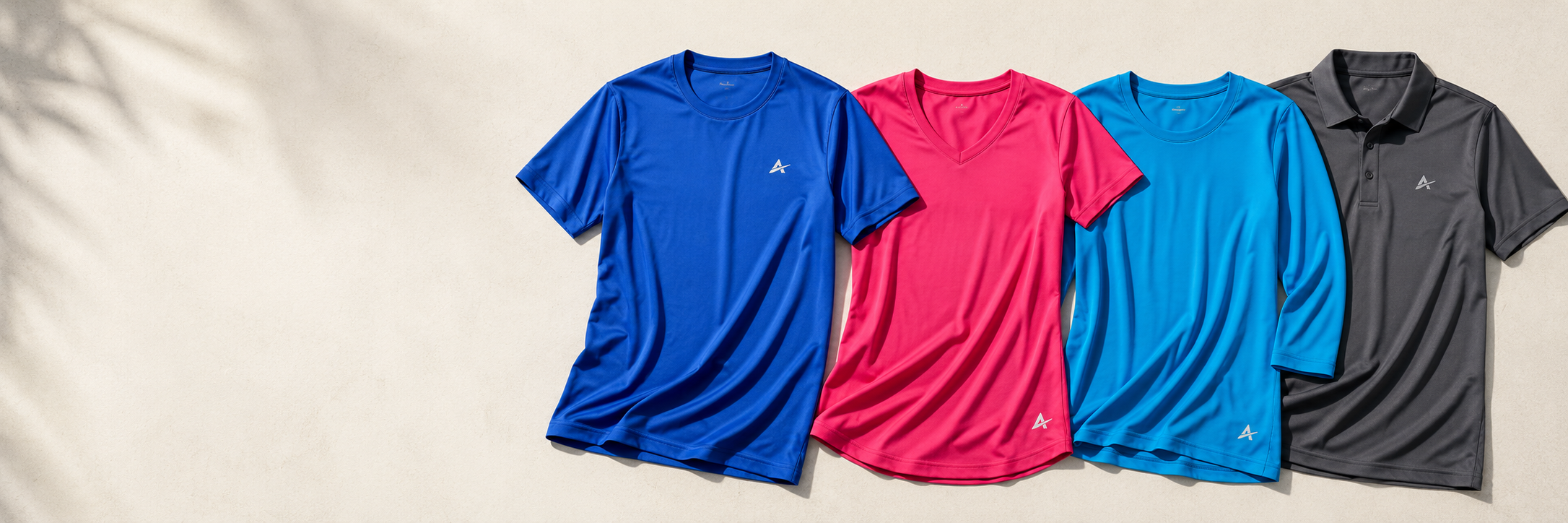
Men’s Cooling Crew Neck
The Men’s Cooling Crew Neck T-Shirt brings temperature-regulating performance into a familiar everyday T-shirt silhouette.
It is an easy starting point for walking, travel, errands, outdoor plans, yard work, and everyday warm-weather wear.
Women’s Cooling V-Neck
The Women’s Cooling V-Neck combines everyday styling with lightweight performance for errands, walking, travel, warm workdays, and summer routines.
Women’s 3/4 Sleeve Cooling Shirt
The Women’s 3/4 Sleeve Cooling Shirt provides additional arm coverage in a relaxed silhouette, making it useful for changing temperatures, travel, walking, gardening, and outdoor errands.
Men’s Cooling Polo
The Men’s Cooling Polo brings performance features into a more polished silhouette for golf, travel, casual workdays, restaurants, and warm-weather plans.
Browse the complete Men’s Cooling Collection and Women’s Cooling Collection to compare additional styles.
What Should You Look for When Shopping for Hot-Weather Apparel?
Instead of searching for one magic term, look for the combination that fits your day.
For general warm-weather comfort, consider:
- Breathable fabric
- Moisture-wicking performance
- Quick-dry construction
- Lightweight stretch
- Temperature-regulating technology
- UPF-rated coverage when sun exposure matters
- A fit that supports airflow and movement
- A silhouette you will actually want to wear outside the activity
The best garment is not necessarily the one with the longest feature list. It is the one whose features match the conditions, activity, coverage, and styling you need.
The Simple Way to Remember It
Performance-apparel terminology becomes much easier once every term has a job.
UPF protects covered skin from UV radiation.
Moisture-wicking moves perspiration.
Breathability supports airflow.
Quick-dry helps fabric recover after becoming damp.
Stretch supports movement.
Sweat-activated technology uses moisture and airflow as part of temperature-regulating performance.
At Arctic Cool, HydroFreeze X™ brings those hot-weather performance ideas together in apparel designed for real-life heat, movement, sweat, travel, work, sports, and everyday wear.
For more hot-weather education, product guides, and activity-specific advice, explore the Staying Cool Hub.
Frequently Asked Questions
What does UPF 50 mean in clothing?
UPF 50 means the rated fabric allows approximately 1/50th of ultraviolet radiation to pass through, blocking about 98% from reaching the skin covered by the garment. UPF protection does not replace sunscreen on exposed skin.
What does moisture-wicking mean?
Moisture-wicking means a fabric is designed to move perspiration away from the skin and distribute it through the material so moisture can dry more efficiently. It does not stop the body from sweating.
Is breathable fabric the same as moisture-wicking fabric?
No. Breathability describes how readily air and moisture can move through or around a fabric, while moisture-wicking describes how the fabric moves perspiration away from the skin. The two features often work together.
What is sweat-activated cooling?
Sweat-activated cooling is fabric technology designed to use moisture and airflow as part of a temperature-regulating process. Arctic Cool’s HydroFreeze X™ technology is designed to work with perspiration, movement, airflow, and evaporation.
Is quick-dry the same as moisture-wicking?
No. Moisture-wicking describes how fabric moves perspiration, while quick-dry describes how efficiently the fabric releases moisture and recovers after becoming damp. Both can support hot-weather comfort.


Leave a comment
This site is protected by hCaptcha and the hCaptcha Privacy Policy and Terms of Service apply.