

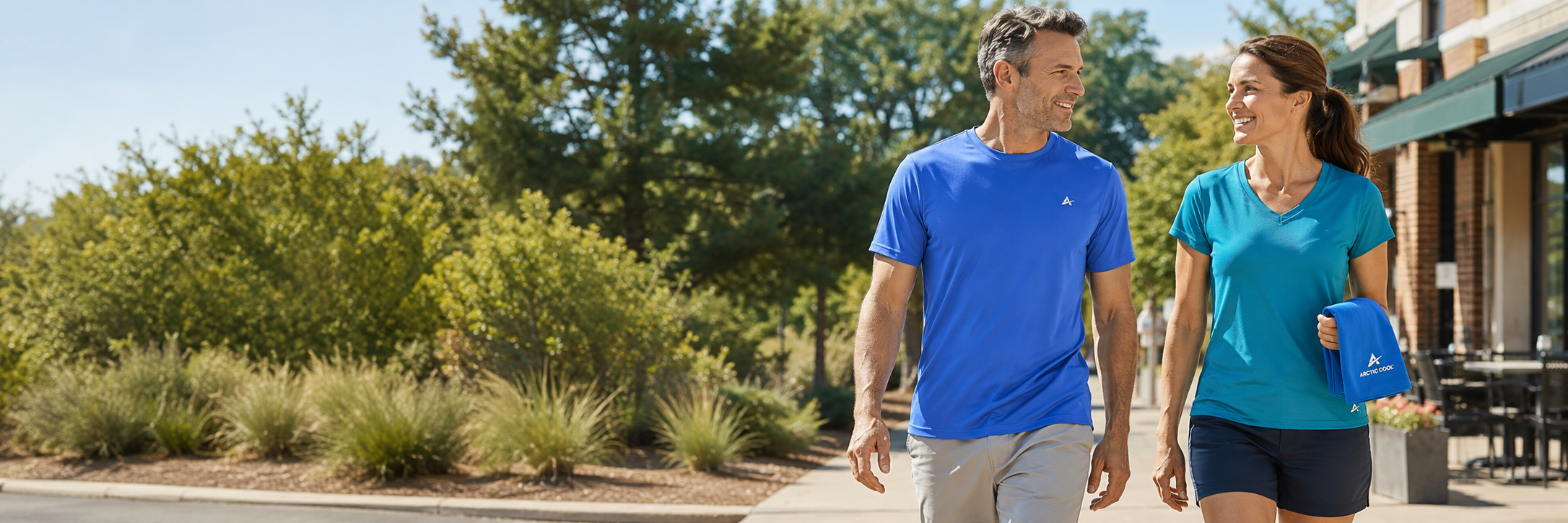
How to Stay Cool in August Heat
August can feel like summer should be winding down, but the heat often tells a different story. Mornings may begin a little earlier, routines may become busier, and fall plans may be appearing on the calendar, yet afternoons can still bring strong sun, humidity, warm pavement, hot cars, and clothing that feels damp long after you begin sweating.
That combination can make late-summer heat especially frustrating. You may be returning to regular workdays, school schedules, errands, travel, yard projects, sports, or outdoor events while still dressing for temperatures that feel like peak summer.
Staying comfortable in August is not about pretending the heat is gone. It is about planning for the warmest part of the day, choosing clothing that manages moisture and airflow, and keeping simple cooling support nearby when your schedule keeps you outside longer than expected.
This guide is part of the Arctic Cool Staying Cool Hub, our central resource for practical comfort through heat, humidity, sun, sweat, travel, work, and everyday outdoor life.
Quick answer: To stay more comfortable in August heat, dress for the hottest part of the day rather than the morning temperature. Choose lightweight, breathable, moisture-wicking, quick-dry clothing, reduce unnecessary layers, use sun protection, plan breaks and shade, and keep a Cooling Towel nearby for especially hot or humid stretches.
Why August Heat Can Feel Different
August heat is not always dramatically different from July heat, but daily life around it often changes.
You may be returning to fuller schedules, spending more time in the car, moving between warm outdoor spaces and strong indoor air conditioning, or trying to complete late-summer projects before routines become even busier.
An August day can include:
- A warm commute or school drop-off
- Heat building inside a parked car
- Sunny parking lots and sidewalks
- Humidity that keeps clothing damp
- Outdoor work or yard projects
- Travel and long days away from home
- Afternoon sports, golf, or walking
- Outdoor meals and community events
- Evening temperatures that remain warmer than expected
The challenge is not simply one hot moment. It is wearing the same outfit through several different environments while the temperature, moisture, airflow, and activity level keep changing.
Dress for the Hottest Part of the Day
One of the easiest mistakes in August is choosing an outfit based only on how the morning feels.
A shirt that feels comfortable during an early commute may feel heavier after an afternoon walk across a parking lot. A layer that seemed useful inside an air-conditioned building may feel unnecessary as soon as you step outside. A cotton tee may begin soft and dry but stay damp once sweat builds.
Before getting dressed, think about:
- The highest expected temperature
- How humid the day may feel
- How much time you will spend outside
- Whether shade will be available
- How much walking or movement is involved
- Whether you will move between air conditioning and outdoor heat
- Whether your plans extend into the afternoon or evening
For more specific outfit guidance during peak temperatures, read What to Wear in 90 Degree Weather.
Choose Clothing That Manages Heat and Moisture
The best August clothing should do more than feel thin when it is dry. It should remain comfortable after heat, movement, and moisture become part of the day.
Lightweight Fabric
Heavy fabric becomes more noticeable as the day continues. Lightweight clothing can feel easier during walking, driving, errands, travel, outdoor work, and long periods away from home.
Lightweight does not have to mean fragile or see-through. The goal is a fabric that provides the coverage you need without unnecessary weight or stiffness.
Breathability
Breathable fabric supports airflow through and around the garment. This can help clothing feel less trapped against the body when outdoor air is warm or still.
Fit matters too. A shirt should have enough room to move and allow airflow without becoming excessively loose or shapeless.
Moisture-Wicking Performance
Moisture-wicking fabric helps move perspiration away from the skin and spread it through the material.
This does not prevent sweating. It helps manage moisture so the shirt is less likely to feel heavy, clingy, or saturated as the day continues.
Quick-Dry Comfort
Quick-dry performance matters when you cannot change clothes after every warm part of the day.
An August outfit may need to move from a sunny parking lot into a meeting, from a walk into a restaurant, or from a yard project into an errand. Fabric that dries efficiently can make those transitions easier.
Lightweight Stretch
Stretch supports comfortable movement while driving, walking, reaching, bending, carrying bags, working outside, or moving through a full schedule.
It can also prevent shirts and bottoms from pulling or bunching as heat and moisture build.
For a complete overview of these fabric and fit considerations, visit Best Clothes for Hot Weather.
How HydroFreeze X™ Supports August Comfort
Arctic Cool apparel is built around HydroFreeze X™, a sweat-activated temperature-regulating technology designed to work when moisture and airflow interact with the fabric.
That system fits late-summer routines because heat may build gradually. You may begin the day indoors, move into a warm vehicle, walk through direct sun, return to air conditioning, and then head outside again.
Moisture-wicking performance helps move perspiration through the fabric. Breathability supports airflow. Quick-dry performance helps the garment recover after becoming damp. HydroFreeze X™ uses moisture and airflow to support a cooler-feeling wearing experience.
The technology does not make August heat disappear or guarantee that someone will never feel warm. It is designed to make the clothing better suited to heat, sweat, airflow, and everyday movement.
Learn more through How Sweat-Activated Cooling Works.
Build a Simple August Heat Wardrobe
You do not need a completely different outfit for every late-summer plan. A small rotation of dependable pieces can cover most August routines.
Start with:
- Two or three breathable everyday cooling shirts
- One option with additional sleeve coverage
- One cooling polo for more polished plans
- One tank or sleeveless option for casual peak heat
- Two lightweight bottoms
- One Cooling Towel
- Comfortable footwear suited to walking and standing
Choose colors and silhouettes that work together so tops and bottoms can be mixed without much planning.
Men’s August Rotation
The Men’s Cooling Collection provides options for everyday heat, work, walking, golf, travel, outdoor plans, and late-summer routines.
A simple men’s rotation may include:
- A Cooling Crew Neck T-Shirt for errands, walking, travel, and everyday wear
- A Cooling Polo for work, golf, meals, and polished plans
- A lightweight long sleeve for extended sun coverage
- A Pocket Workwear Tee for yard work, garage projects, and utility-focused days
- Lightweight shorts or performance bottoms
Women’s August Rotation
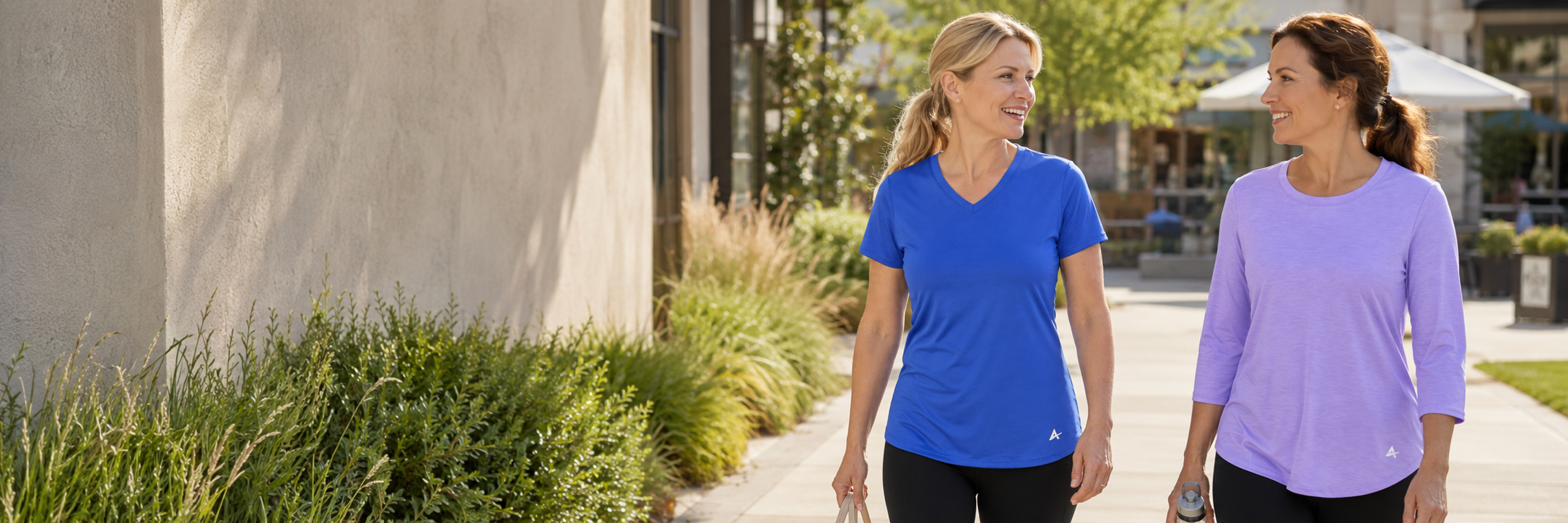
The Women’s Cooling Collection includes short sleeves, 3/4 sleeves, long sleeves, tanks, polos, bottoms, and other warm-weather options.
A simple women’s rotation may include:
- A Short Sleeve Cooling V-Neck for errands, walking, and everyday routines
- A 3/4 Sleeve Cooling Shirt for changing indoor and outdoor temperatures
- A Cooling Tank or Sleeveless Tank for casual peak-heat plans
- A Cooling Polo for golf, travel, work, and outdoor meals
- Lightweight shorts, capris, leggings, or other movement-friendly bottoms
Plan for Humidity, Not Only Temperature
A forecast number does not tell the entire clothing story. Humidity can make sweat slower to evaporate and cause ordinary fabric to remain damp for longer.
In humid August conditions:
- Prioritize both moisture-wicking and quick-dry performance.
- Avoid thick fabric that absorbs moisture and holds it.
- Choose a fit that allows comfortable airflow.
- Reduce unnecessary layers.
- Keep a backup cooling shirt available during travel or long workdays.
- Bring a Cooling Towel when outdoor time will be extended.
A lightweight shirt can still feel uncomfortable if it traps moisture. The most useful humid-weather apparel combines low weight, breathability, moisture movement, and efficient drying.
Explore more humidity-specific recommendations in Best Cooling Clothes for Humid Weather.
Use a Cooling Towel for the Hottest Parts of the Day
A cooling shirt forms the base of the outfit. An Arctic Cool Cooling Towel can provide additional support when a particular part of the day becomes hotter than expected.
Keep one:
- In the car
- Inside a work bag
- In a travel tote
- Near your yard-work supplies
- In a golf bag
- With outdoor-event essentials
- Near a walking or workout setup
A Cooling Towel can be especially useful during peak afternoon heat, long outdoor waits, travel delays, yard projects, humid walks, golf rounds, and the transition back to a warm vehicle.
The shirt and towel serve different purposes. The shirt works as the continuous base layer, while the towel can be activated and used during specific moments.
Read Cooling Towels vs. Cooling Shirts for a complete comparison.
How to Stay Cool During August Errands
Errands often create more heat exposure than expected. You may move between a warm car, sunny parking lots, outdoor walkways, crowded stores, and strong indoor air conditioning several times in one afternoon.
For an August errand outfit:
- Choose a breathable short-sleeve cooling shirt or tank.
- Wear lightweight bottoms with comfortable stretch.
- Bring a light 3/4 sleeve only when indoor air conditioning requires it.
- Avoid leaving unnecessary heavy layers in the outfit.
- Keep a Cooling Towel in the car or tote.
- Choose footwear that remains comfortable through walking and standing.
Dress for the warm parking lot and car rather than only the cooled store.
How to Stay Cool During August Workdays
Late-summer workdays can involve commuting, warm vehicles, indoor air conditioning, lunch outside, walking between buildings, and afternoon errands.
The best workday outfit balances comfort with the level of polish your schedule requires.
- Choose a Cooling Polo when a collar is needed.
- Choose a Cooling Crew or V-Neck for casual workplaces.
- Use a lightweight 3/4 sleeve for indoor and outdoor transitions.
- Pair the top with stretch bottoms that remain comfortable while sitting and walking.
- Keep a spare shirt available during especially long or humid days.
The goal is to avoid choosing a polished shirt that looks appropriate but becomes heavy or restrictive once the commute and afternoon heat begin.
How to Stay Cool During August Travel
August travel can involve airports, road trips, warm destinations, rental cars, walking-heavy itineraries, and long periods in the same outfit.
Choose travel clothing that can handle several environments without requiring an immediate change.
A practical travel outfit may include:
- A breathable Cooling Crew, V-Neck, or Polo
- Lightweight stretch bottoms
- A 3/4 sleeve or lightweight layer for cold indoor spaces
- Comfortable walking shoes
- A Cooling Towel packed where it is easy to reach
Quick-dry fabric is especially useful on travel days because the same shirt may need to remain wearable through transportation, meals, sightseeing, and evening plans.
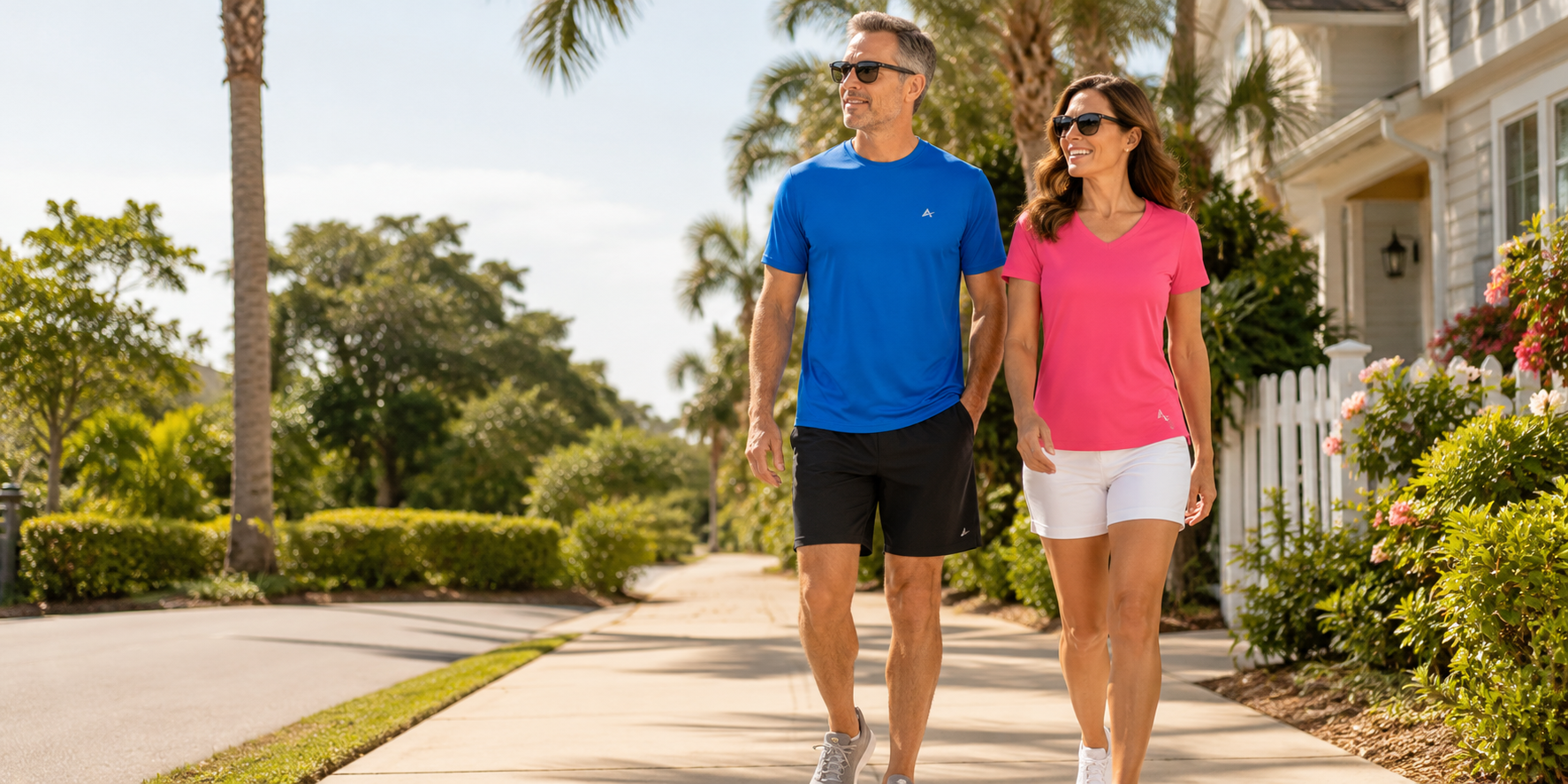
How to Stay Cool While Walking in August
August walking routes can feel different from the same route earlier in the season. Shade may change, pavement may remain warm into the evening, and humidity can make ordinary clothing feel damp for longer.
For a hot-weather walk:
- Wear a breathable, quick-dry cooling shirt.
- Choose lightweight shorts or movement-friendly bottoms.
- Use sunscreen on exposed skin.
- Bring water for longer routes.
- Choose shade when practical.
- Keep a Cooling Towel available for humid or exposed routes.
- Adjust timing and distance when conditions are hotter than expected.
An early or evening walk may feel more manageable, but the outfit should still be selected for lingering warmth and humidity.
How to Stay Cool During Yard Work and Outdoor Projects
August is often a time for mowing, trimming, garden maintenance, garage projects, cleanup, and other outdoor tasks before schedules change.
Outdoor work adds movement to the environmental heat, so clothing should support bending, reaching, lifting, walking, and repeated motion.
Choose:
- A breathable Cooling Crew, Pocket Workwear Tee, V-Neck, or 3/4 Sleeve
- Lightweight stretch bottoms
- Useful sun coverage based on the task
- Practical footwear
- A Cooling Towel for breaks
- Shade, water, and planned pauses during extended outdoor time
Avoid wearing a heavy shirt simply because it is an older shirt you do not mind getting dirty. If it traps heat, holds moisture, or restricts movement, it may make the project feel harder.
Do Not Forget August Sun Exposure
Late summer does not mean sun protection is no longer important.
When outdoor plans involve extended direct sun, look for UPF 50+ protection where applicable. Remember that the rating applies to the areas covered by the fabric.
Combine clothing coverage with sunscreen on exposed skin, useful headwear, sunglasses, shade, and thoughtful timing.
A lightweight long sleeve or 3/4 sleeve may be useful during walking, golf, travel, fishing, yard work, and other activities where extended coverage makes sense.
Learn more in UPF 50 Clothing for Hot Weather.
Build an August Heat Kit
A small heat kit can make busy late-summer days easier to manage.
Keep the following together in your car, work bag, travel tote, or outdoor setup when appropriate:
- Cooling Towel
- Water bottle
- Sunscreen
- Sunglasses
- Lightweight headwear
- Spare breathable cooling shirt
- Very light layer for strong indoor air conditioning
The purpose is not to carry a large amount of gear. It is to keep a few useful items nearby so one unexpectedly hot part of the day does not disrupt the rest of your schedule.
What to Avoid Wearing in August Heat
- Heavy cotton shirts that remain damp
- Dense polos with limited airflow
- Thick layers chosen only for air-conditioned spaces
- Overly tight shirts that cling as moisture builds
- Stiff bottoms with limited stretch
- Unnecessary jackets or sweatshirts carried through outdoor heat
- Outfits selected only for the morning temperature
- Shirts that look polished but feel heavy once damp
The best August outfit is not necessarily the most minimal outfit. It is the one that fits your activity, sun exposure, humidity, schedule, and preferred level of coverage.
Shop for August Heat
Build a late-summer rotation around breathable shirts, polos, tanks, coverage options, and movement-friendly bottoms.
- Explore the Men’s Cooling Collection for crews, polos, long sleeves, workwear, shorts, and hot-weather essentials.
- Explore the Women’s Cooling Collection for V-necks, 3/4 sleeves, long sleeves, tanks, polos, bottoms, and everyday heat-ready styles.
- Add an Arctic Cool Cooling Towel for especially hot or humid stretches.
August Heat Is Still Summer Heat
August may bring changing routines, earlier mornings, and the first signs of the season beginning to shift, but the clothing challenge remains familiar: heat, humidity, sun, sweat, and long days that move between different environments.
Staying more comfortable starts with planning for the hottest part of the day. Choose lightweight, breathable clothing that manages moisture, dries efficiently, and moves naturally. Use the coverage that fits the activity. Keep a Cooling Towel nearby when extra support may be helpful.
The goal is not to build a complicated late-summer system. It is to make a few dependable choices that work through errands, workdays, travel, walking, outdoor projects, events, and the ordinary August routines that keep going even when the heat does not.
Frequently Asked Questions
How can I stay cool during August heat?
Dress for the hottest part of the day using lightweight, breathable, moisture-wicking, and quick-dry clothing. Reduce unnecessary layers, plan shade and breaks, use sun protection, and keep a Cooling Towel nearby for especially hot or humid periods.
What clothes are best for August heat?
The best clothes for August heat are lightweight, breathable, moisture-wicking, quick-drying, and comfortable through movement. Cooling crews, V-necks, tanks, 3/4 sleeves, polos, lightweight bottoms, and UPF 50+ styles can all be useful depending on the activity.
How should I dress for humid August weather?
Choose clothing that combines moisture-wicking and quick-dry performance with breathable construction. Avoid thick fabrics and overly tight fits that remain damp or cling to the body as humidity and sweat build.
Should I use a cooling shirt or a Cooling Towel in August?
A cooling shirt works as the continuous base of the outfit, while a Cooling Towel provides optional support during peak afternoon heat, humid outdoor activities, travel, yard work, walking, golf, or long periods with limited shade. Using both may make sense during especially hot days.
What should I wear when August temperatures reach 90 degrees?
Wear a breathable cooling shirt or tank with lightweight, movement-friendly bottoms and minimal unnecessary layers. Add UPF 50+ coverage where appropriate, use sunscreen on exposed skin, and keep a Cooling Towel nearby for extended outdoor time.

Leave a comment
This site is protected by hCaptcha and the hCaptcha Privacy Policy and Terms of Service apply.