

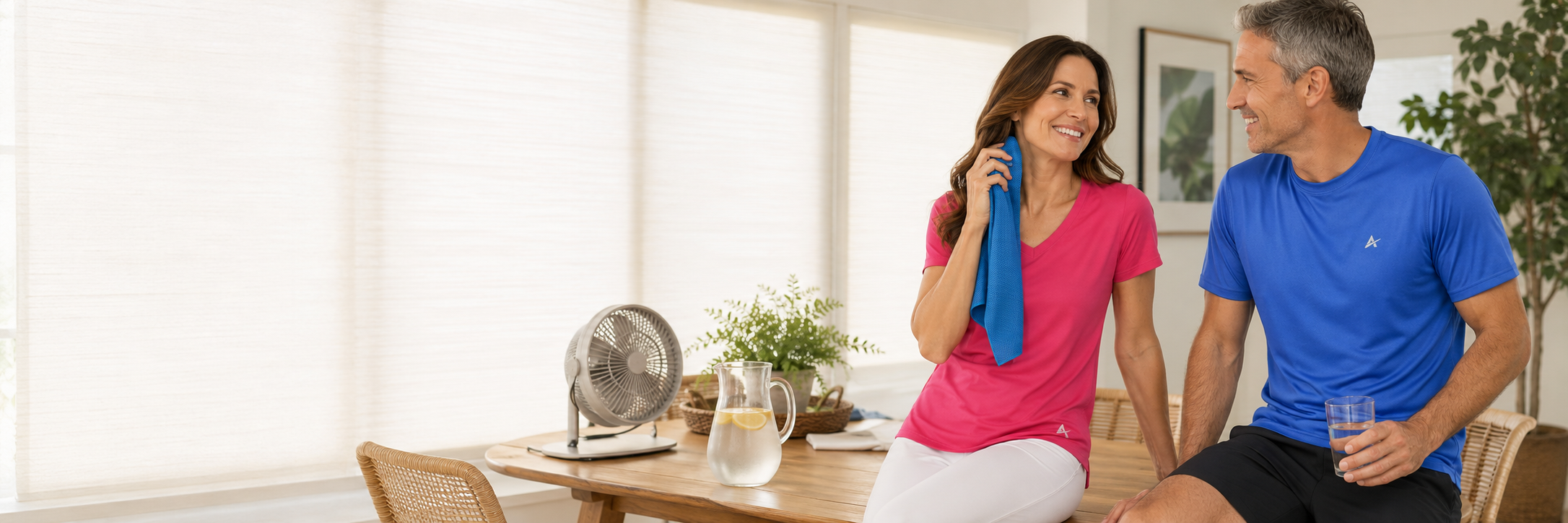
How to Stay Cool Without AC
A home without air conditioning can become uncomfortable quickly, especially when several hot days occur in a row. Sunlight warms the windows and walls, cooking adds more heat, outdoor air may remain warm into the evening, and ordinary clothing can begin feeling damp or heavy.
Staying cool without AC usually requires more than placing a fan in the room. The strongest approach combines several practical steps: keep outdoor heat from entering, use cooler air when it is available, cool your body directly, stay hydrated, reduce indoor heat sources, and have somewhere cooler to go when the home becomes too hot.
Lightweight clothing and cooling accessories can support everyday comfort, but they cannot make a dangerously hot room safe. During extreme heat, your plan should always include access to an air-conditioned public space, cooling center, family member’s home, or another cooler location.
This guide is part of the Arctic Cool Staying Cool Hub, our central resource for heat, humidity, perspiration, temperature-regulating clothing, and real-life warm-weather comfort.
Quick answer: To stay cooler without AC, shade sunny windows, keep hotter outdoor air from entering during the day, ventilate when the air outside becomes cooler, take cool showers or baths, drink water regularly, reduce oven and stove use, wear loose lightweight clothing, and spend time in an air-conditioned location if your home remains dangerously hot.
Start With a Safety Plan, Not Just a Comfort Plan
There is an important difference between feeling uncomfortable and being in unsafe heat.
A fan, cooling shirt, damp cloth, or cold drink may make a warm room feel more manageable. None of those should be treated as a substitute for air conditioning or a cooler location during dangerous temperatures.
Before a heat wave or especially hot day, identify:
- A nearby library, mall, community center, senior center, cooling center, or other air-conditioned location
- A family member, friend, or neighbor with reliable air conditioning
- Transportation you can use if your home becomes too hot
- Someone who can check on you during an outage or heat emergency
- A plan for medications or medical equipment affected by a power outage
- A cooler place for pets
Check local heat alerts and make the decision to leave for a cooler location before you begin feeling unwell.
Do Not Depend on a Fan Alone
Fans move air and may provide comfort in moderately warm conditions. During extreme indoor heat, however, moving hot air is not the same as lowering the room temperature.
Use a fan as one part of a larger strategy that includes cool water, hydration, window shading, reduced heat sources, and access to a cooler location.
Pay Attention to How You Feel
Stop what you are doing and move to a cooler place when heat begins causing unusual weakness, dizziness, headache, nausea, muscle cramping, shortness of breath, or heavy perspiration that feels different from normal.
Confusion, fainting, loss of consciousness, or an inability to cool down can indicate a serious emergency. Contact emergency services immediately.
People who are older, pregnant, very young, living alone, taking certain medications, or managing chronic health conditions may need additional precautions and should follow guidance from a qualified healthcare professional.
Keep Daytime Heat Outside
The most effective no-AC strategy begins before the room becomes hot.
Shade Windows That Receive Direct Sun
Close blinds, curtains, shades, or other window coverings before direct sunlight reaches the glass.
Pay particular attention to:
- East-facing windows in the morning
- South-facing windows through the middle of the day
- West-facing windows during the afternoon
- Rooms with large areas of uncovered glass
Exterior awnings and properly designed window coverings may reduce heat before it enters the room, but ordinary curtains and shades can still be useful.
Close Windows When the Outdoor Air Is Hotter
An open window does not automatically cool the room. If the air outside is hotter than the air inside, an open window may bring more heat into the home.
Close windows during the hottest part of the day when the outdoor air is warmer. Open them later only when the outdoor temperature becomes cooler and local air quality makes ventilation appropriate.
Close Off Unused Hot Rooms
If one side of the home receives intense afternoon sun, close the door and spend more time in a cooler room.
Lower floors, north-facing rooms, basements that are safe and dry, and spaces away from direct sunlight may remain more comfortable.
Turn Off Unnecessary Heat Sources
Lights, electronics, appliances, and cooking equipment all release heat.
On especially hot days:
- Turn off unused lights.
- Shut down electronics that are not needed.
- Avoid running heat-producing appliances during the afternoon.
- Move charging devices away from the area where you are sitting.
- Use the coolest practical room as your main daytime space.
Use Cooler Air at the Right Time
Ventilation is most useful when the outdoor air is actually cooler than the air inside.
Ventilate During Cooler Morning or Evening Hours
Open windows on opposite sides of the home when outdoor conditions are cooler and the air quality is acceptable. This can create a cross-breeze that helps move warmer indoor air outside.
If the home has upper and lower windows, warm air may escape through a higher opening while cooler air enters through a lower opening.
Use Fans to Support Air Exchange
A window fan can help exhaust warm air from one side of the room while another opening allows cooler air to enter.
Once the outdoor air begins warming again, close the windows and window coverings to retain the cooler indoor air for as long as possible.
Consider Humidity and Air Quality
Opening windows may not be helpful when the outdoor air is hotter, extremely humid, smoky, or affected by poor air quality.
Check local conditions rather than assuming that outdoor air will always improve the room.
Cool Your Body Directly
When AC is unavailable, cooling the body directly can be more useful than trying to change the temperature of the entire home with a small fan.
Take a Cool Shower or Bath
A cool shower or bath can provide direct relief after time outdoors, household chores, a warm commute, or several hours in a hot room.
The water should feel comfortably cool rather than painfully cold.
Use Cool, Damp Cloths
Apply a clean, cool, damp cloth to areas such as the neck, forearms, or face during a break.
Refresh it as the cloth becomes warm.
Use a Cooling Towel
An Arctic Cool Cooling Towel provides a reusable option for warm rooms, outdoor errands, power outages, travel, yard work, and hot commutes.
Wet the towel with water and use it according to the product directions. Keep a second towel available when one is being washed or dried.
A Cooling Towel can support comfort, but it should remain part of a broader plan that includes water, rest, airflow, and access to a cooler place.
Read Cooling Towels vs. Cooling Shirts to understand when each option is most useful.
Keep Water Within Reach
Drink water regularly rather than waiting until you feel extremely thirsty.
Keep a refillable bottle near the place where you work, rest, or complete household tasks. People who have been told to limit fluids should follow the instructions of their healthcare professional.
Wear Clothing That Does Not Trap Heat and Moisture
Clothing cannot lower a dangerously high room temperature, but it can affect how heat and perspiration feel against the body.
Look for clothing that is:
- Lightweight
- Breathable
- Loose enough to allow comfortable airflow
- Moisture-wicking
- Quick-drying
- Flexible through sitting, walking, and household movement
- Comfortable after it becomes damp
For a broader fabric and fit comparison, read Best Clothes for Hot Weather.
Avoid Heavy, Slow-Drying Clothing
Thick cotton and other highly absorbent fabrics may begin comfortably but remain damp after perspiration builds.
Dense sweatshirts, heavy lounge clothing, stiff pants, and unnecessary layers can also make indoor heat feel more noticeable.
Choose a Comfortable Fit
Very tight clothing may cling once it becomes damp. Extremely oversized clothing may add unnecessary fabric and weight.
Choose a fit that gives you room to move and allows air to circulate without becoming cumbersome.
Change Out of Damp Clothing
If a shirt remains saturated after outdoor activity or household work, change into a dry lightweight top when possible.
Keeping one clean shirt in the coolest room can make it easier to reset after a warm part of the day.
How Arctic Cool Apparel Fits a No-AC Routine
Arctic Cool apparel is designed around HydroFreeze X™, a sweat-activated temperature-regulating technology that works as moisture and airflow interact with the fabric.
Moisture-wicking construction helps distribute perspiration through the material. Breathability supports airflow, quick-dry performance helps the shirt recover after becoming damp, and lightweight stretch supports everyday movement.
These features can make the clothing more suitable for warm indoor spaces, errands, travel, household chores, and outdoor transitions. They do not replace air conditioning, hydration, cool water, rest, or emergency heat precautions.
Learn more in How Sweat-Activated Cooling Works.
Men’s Everyday No-AC Option
The Men’s Cooling Crew Neck T-Shirt provides an easy everyday silhouette for warm home offices, errands, travel, household tasks, and casual outdoor plans.
Pair it with lightweight shorts or flexible bottoms and change into a dry shirt if the first becomes heavily damp.
Women’s Everyday No-AC Option
The Women’s Short Sleeve Cooling V-Neck provides an open neckline and familiar everyday fit for warm indoor spaces, errands, working from home, and regular summer routines.
A cooling tank or sleeveless top may provide another option when less arm coverage feels more comfortable.
Shop by Collection
Explore the Men’s Cooling Collection and Women’s Cooling Collection for lightweight shirts, tanks, polos, layers, and bottoms suited to hot-weather routines.
Create a Cooler Daily Schedule
When AC is unavailable, the timing of everyday activities matters.
Early Morning
- Open windows when the outdoor air is cooler and air quality is acceptable.
- Use fans to move cooler air through the home.
- Complete cooking, laundry, cleaning, or exercise before the temperature rises.
- Refill water bottles and prepare Cooling Towels.
- Close windows and shades before outdoor heat builds.
Midday and Afternoon
- Stay in the coolest available room.
- Keep sunny windows covered.
- Avoid oven and stove use.
- Reduce demanding household activity.
- Take cool showers or use damp cloths.
- Drink water regularly.
- Move to an air-conditioned location if the home becomes too hot.
Evening
- Check whether the outdoor air has become cooler than the indoor air.
- Ventilate only when conditions are favorable.
- Use fans to exhaust accumulated warm air.
- Take a cool shower before settling down.
- Prepare water, a dry lightweight shirt, and a Cooling Towel for the next day.
Reduce Heat From Cooking
The oven and stove can noticeably warm a home, especially in a small kitchen or apartment.
During the hottest part of the day, choose meals that require less indoor heat when practical.
Options may include:
- Cold sandwiches or wraps
- Salads
- Fresh fruit
- Previously cooked and chilled foods
- Meals prepared during cooler morning hours
- Small appliances that release less heat than a full oven, when safely used
Follow food-safety and appliance instructions, and never use outdoor cooking equipment inside the home.
Set Up the Coolest Room
Rather than trying to make the entire home equally comfortable, create one primary cooling space.
Choose the room with:
- The least direct sunlight
- The best safe ventilation
- The fewest heat-producing electronics
- Space for water and cooling supplies
- Comfortable seating or a place to rest
- Access to a bathroom or cool water
Keep the room simple. Turn off unnecessary devices, close doors to hotter spaces, and keep water, damp cloths, a Cooling Towel, and lightweight clothing nearby.
Prepare for a Power Outage
A power outage can remove fans, refrigeration, and other usual comfort tools at the same time outdoor temperatures remain high.
Prepare a basic no-power heat kit with:
- Drinking water
- Battery-powered lights
- A charged portable power bank
- A battery-powered fan for moderate conditions
- Cooling Towels or clean washcloths
- Lightweight clothing
- Important phone numbers
- A transportation plan
- A known air-conditioned destination
Do not remain in a dangerously hot home simply because the outage may end soon. Relocate early when conditions are becoming unsafe.
Check on Other People
Heat can be especially difficult for older adults, people living alone, infants, young children, pregnant people, and anyone managing certain medical conditions.
Check on relatives, friends, and neighbors rather than assuming they will ask for help.
Confirm that they:
- Have drinking water
- Can reach a cooler location
- Have working communication
- Are not relying solely on a fan in extreme heat
- Have a plan for medications and medical equipment
- Know whom to contact if they begin feeling unwell
What Not to Do When You Have No AC
- Do not rely on a fan as the only strategy during extreme heat.
- Do not keep windows open when the outdoor air is hotter than the indoor air.
- Do not leave sunny windows uncovered all afternoon.
- Do not complete demanding chores during the hottest part of the day when they can be postponed.
- Do not use the oven unnecessarily.
- Do not wear thick, slow-drying clothing simply because you are staying indoors.
- Do not ignore dizziness, weakness, nausea, confusion, or fainting.
- Do not wait until the home becomes unbearable before identifying a cooler place to go.
- Never leave children, adults who need assistance, or pets inside a parked vehicle.
A No-AC Cooling Checklist
- Check the temperature, heat alerts, and air quality.
- Identify an air-conditioned location before the day becomes hot.
- Cover windows receiving direct sun.
- Close windows when the outside air is hotter.
- Ventilate during cooler hours when conditions are appropriate.
- Reduce oven, stove, appliance, and electronics use.
- Drink water regularly.
- Take cool showers or baths.
- Keep damp cloths or a Cooling Towel ready.
- Wear loose, lightweight, breathable clothing.
- Move demanding activities to cooler hours.
- Check on relatives, friends, and neighbors.
- Leave for a cooler location before heat symptoms develop.
Comfort Tools Work Best as Part of a Complete Plan
Staying cool without AC is not about finding one product or trick that solves the entire problem.
Shade reduces heat entering the home. Ventilation removes warm air when outdoor conditions are cooler. Cool water helps lower how hot the body feels. Hydration supports the body through warm conditions. Lightweight clothing makes perspiration and movement easier to manage. A Cooling Towel provides flexible support during hotter stretches.
Use these tools together, and keep a cooler destination in your plan when the home temperature continues rising.
For more background on why heat may affect some people more than others, read Why Do I Overheat So Easily?.
You can also learn how humidity changes clothing comfort in The Best Fabric for Hot and Humid Weather.
Frequently Asked Questions
What is the fastest way to cool down without air conditioning?
Move to the coolest available space, take a cool shower or bath, use a clean damp cloth or Cooling Towel, drink water, reduce physical activity, and remove unnecessary layers. If the home remains dangerously hot, go to an air-conditioned public location or cooling center.
Should I keep my windows open when I do not have AC?
Open windows when the outdoor air is cooler than the indoor air and local air quality is acceptable. When the outdoor air becomes hotter, close the windows and cover sunny glass to reduce additional heat entering the home.
Can a fan keep me safe during extreme heat?
A fan may provide comfort in moderately warm conditions, but it should not be the only cooling strategy during extreme heat. Combine airflow with cool water, hydration, reduced heat sources, and access to an air-conditioned location.
What clothes should I wear in a hot house?
Choose loose, lightweight, breathable clothing with moisture-wicking and quick-dry performance. Avoid thick, restrictive, or slow-drying garments that hold moisture and add unnecessary weight.
Does a Cooling Towel replace air conditioning?
No. A Cooling Towel can provide direct comfort when wet, but it does not lower a dangerously high room temperature or replace air conditioning, hydration, rest, or emergency heat precautions.


Leave a comment
This site is protected by hCaptcha and the hCaptcha Privacy Policy and Terms of Service apply.