

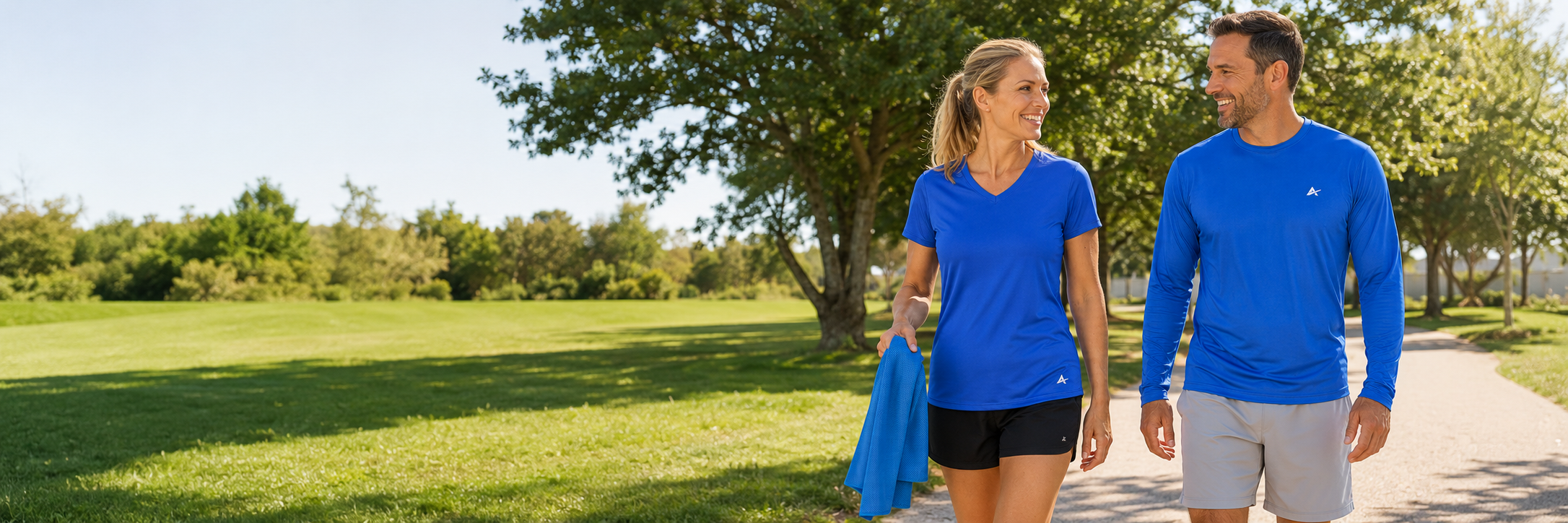
What to Wear When You’re Outside All Day
Spending the entire day outside creates a different clothing challenge than stepping out for a short errand or quick walk.
The morning may begin comfortably, but several hours later the same outfit may be dealing with direct sun, humidity, warm pavement, accumulated sweat, repeated movement, limited shade, and an afternoon temperature that feels very different from the one you dressed for.
You may also be far from a convenient place to change. That means the shirt, bottoms, coverage, headwear, and accessories you choose need to work together from the beginning of the day through its hottest point.
The best all-day outdoor outfit should feel lightweight, breathe well, manage moisture, dry efficiently, support movement, and provide the right amount of sun coverage for the activity.
This guide is part of the Arctic Cool Staying Cool Hub, our central resource for practical comfort through heat, humidity, sun, sweat, outdoor work, travel, and everyday activity.
Quick answer: When you will be outside all day, wear a lightweight, breathable cooling shirt with moisture-wicking and quick-dry performance. Add movement-friendly bottoms, UPF 50+ coverage where appropriate, breathable headwear, sunscreen on exposed skin, and a Cooling Towel for the hottest parts of the afternoon.
Why an All-Day Outdoor Outfit Requires More Planning
An outdoor outfit is often chosen based on the conditions at the start of the day. The problem is that the morning temperature may not represent what the clothing will need to handle later.
A full outdoor day can include:
- A cooler or less humid morning
- Several hours of increasing sunlight
- Warm pavement, soil, grass, sand, or concrete
- Physical movement and accumulated perspiration
- Limited shade during part of the schedule
- Humidity that slows evaporation
- Changing wind and airflow
- Outdoor meals, travel, work, or events after the main activity
- Evening temperatures that remain warmer than expected
The goal is not to wear the fewest clothes possible. It is to choose pieces that match the activity, duration, sun exposure, and warmest expected conditions.
Dress for the Hottest Part of the Day
A shirt may feel perfectly comfortable at 8 a.m. and completely different by 3 p.m.
Before choosing an outfit, consider:
- The highest forecast temperature
- Expected humidity
- How much direct sun the location receives
- Whether you will be walking, lifting, bending, standing, or sitting
- How much shade will be available
- Whether the event or project continues into the evening
- Whether you can easily change clothes
- The amount of sun coverage you prefer
For more peak-temperature guidance, read What to Wear in 90 Degree Weather.
Start With a Breathable Cooling Shirt
The shirt is the foundation of the all-day outdoor outfit because it covers much of the upper body and is often the first part of the outfit to become uncomfortable once perspiration builds.
Look for a shirt with:
- Lightweight fabric
- Breathable construction
- Moisture-wicking performance
- Quick-dry comfort
- Stretch through the shoulders and torso
- A fit that allows comfortable airflow
- UPF 50+ protection where applicable
- A silhouette you can continue wearing after the activity ends
A shirt should not only feel comfortable while it is clean and dry. It should remain manageable after several hours of heat, movement, and moisture.
Best Men’s Short-Sleeve Option: Cooling Crew Neck
The Men’s Cooling Crew Neck T-Shirt is a practical foundation for casual all-day outdoor plans.
Its familiar crew-neck silhouette makes it useful for:
- Yard work and home projects
- Outdoor events
- Walking and sightseeing
- Travel days
- Fishing and recreation
- Backyard gatherings
- Casual outdoor work
- Days that continue into errands or meals
The shirt combines HydroFreeze X™ sweat-activated temperature-regulating technology with breathability, moisture-wicking performance, quick-dry comfort, lightweight stretch, and UPF 50+ protection.
Pair it with lightweight shorts or movement-friendly bottoms and add a Cooling Towel when the afternoon is expected to become especially hot.
Best Women’s Short-Sleeve Option: Cooling V-Neck
The Women’s Short Sleeve Cooling V-Neck offers an easy everyday option for women who want hot-weather performance without a gym-only appearance.
It works well for:
- Outdoor errands
- Gardening and lighter yard projects
- Walking and sightseeing
- Festivals and community events
- Travel and road trips
- Outdoor meals
- Casual recreational activities
The open V-neck and short sleeves provide a familiar warm-weather silhouette, while the moisture-wicking and quick-dry fabric helps the shirt remain more comfortable as the day continues.
Pair it with lightweight shorts, capris, leggings, or another breathable bottom based on the activity.
When Long Sleeves Make Sense Outside
Long sleeves may sound uncomfortable during a hot day, but lightweight coverage can be useful when you will spend several hours in direct sun.
A long sleeve may make sense for:
- Fishing and boating
- Property and ranch work
- Gardening and landscaping
- Walking on exposed trails or paths
- Outdoor events with limited shade
- Travel and sightseeing in strong sun
- Activities near water where reflected sunlight is part of the day
The key is choosing a long sleeve built with lightweight, breathable, moisture-wicking, quick-dry fabric instead of a thick layer that traps heat.
Men’s Cooling Long Sleeve Crew
The Men’s Cooling Long Sleeve Crew provides extended arm coverage with lightweight stretch, moisture management, and UPF 50+ protection.
It is a practical choice for long outdoor days when additional coverage is more useful than a standard short sleeve.
Women’s Cooling Long Sleeve V-Neck
The Women’s Cooling Long Sleeve V-Neck provides full-length coverage in an everyday silhouette.
It can work well for walking, travel, outdoor projects, changing morning-to-afternoon conditions, and days when more arm coverage is preferred.
Learn more about choosing sun-protective apparel in UPF 50 Clothing for Hot Weather.
Choose Lightweight, Movement-Friendly Bottoms
A breathable shirt cannot carry the complete outfit if the bottoms feel thick, stiff, or restrictive.
All-day outdoor bottoms should offer:
- A lightweight fabric feel
- Stretch for walking, bending, sitting, and reaching
- A comfortable waistband
- Useful pockets without unnecessary bulk
- A length appropriate for the activity
- Enough versatility for plans after the main activity
Shorts
Lightweight shorts are a simple option for casual activities, yard work, walking, outdoor events, travel, and recreation.
Choose a pair that moves comfortably and does not become restrictive when sitting, bending, or walking for several hours.
Capris and Lightweight Pants
Capris or lightweight pants provide more leg coverage for gardening, walking, travel, outdoor events, and activities where shorts may not feel appropriate.
Avoid dense or stiff fabrics that add unnecessary weight as the temperature rises.
Activity-Specific Bottoms
Golf, hiking, outdoor work, fishing, and other activities may require different pocket arrangements, coverage, durability, or movement.
Choose the bottom for the job, but keep the same core requirements: low weight, comfortable stretch, and a fit you can wear for the full day.
Add Headwear for Long Periods in the Sun
Headwear can provide shade for the face and eyes, but a thick or poorly ventilated hat may begin feeling uncomfortable after several hours.
Look for:
- Breathable or micro-ventilated construction
- A comfortable fit that does not feel overly tight
- A brim suited to the activity
- Lightweight materials
- A style that stays secure during movement
Browse Arctic Cool Cooling Headwear for caps and hats designed for hot-weather activity.
Headwear does not replace sunscreen or other sun-protection choices. Apply sunscreen to exposed skin and use available shade when practical.
Keep a Cooling Towel Nearby
A cooling shirt works continuously as the base of the outfit. An Arctic Cool Cooling Towel provides flexible support during the warmest parts of the day.
Keep one:
- In a work bag or vehicle
- With yard or gardening supplies
- In a golf or recreation bag
- Inside a festival or travel tote when permitted
- Near a water bottle during a long outdoor project
- At a shaded rest area
It can be especially useful during peak afternoon heat, humid periods, breaks between tasks, long waits outdoors, and the transition back to a warm vehicle.
Read Cooling Towels vs. Cooling Shirts to learn how the two products fit into the same hot-weather routine.
How HydroFreeze X™ Supports an All-Day Outdoor Outfit
Arctic Cool apparel is built around HydroFreeze X™, a sweat-activated temperature-regulating technology designed to work when moisture and airflow interact with the fabric.
That matters during a long outdoor day because body heat and perspiration usually build gradually.
You may begin the morning feeling comfortable, then start perspiring as the sun rises, movement increases, and shade becomes limited.
Moisture-wicking performance helps move perspiration through the fabric. Breathability supports airflow, quick-dry performance helps the shirt recover after becoming damp, and lightweight stretch allows the garment to move naturally.
HydroFreeze X™ does not eliminate outdoor heat or replace hydration, rest, shade, or thoughtful heat planning. It is designed to make the apparel better suited to heat, sweat, movement, and long periods of wear.
What to Wear for Different All-Day Outdoor Plans
For Outdoor Work and Property Projects
- Men’s Cooling Crew or lightweight Long Sleeve Crew
- Flexible work or performance bottoms
- Practical footwear
- Breathable headwear
- Cooling Towel for breaks
Choose the sleeve length based on direct sun, the task, and the amount of coverage required.
For a more detailed work-focused guide, read How to Stay Cool Working Outside in Hot Weather.
For Gardening and Yard Work
- Women’s Cooling V-Neck, 3/4 Sleeve, or Long Sleeve V-Neck
- Men’s Cooling Crew or Long Sleeve Crew
- Lightweight stretch bottoms
- Supportive footwear
- Headwear and sunscreen
- Cooling Towel nearby
Gardening and yard work involve bending, reaching, kneeling, carrying, and walking, so clothing should move without pulling or becoming restrictive.
Explore additional outfit ideas in What to Wear for Yard Work in the Heat.
For Walking and Sightseeing
- Men’s Cooling Crew or Women’s Cooling V-Neck
- Lightweight walking shorts, capris, or pants
- Comfortable footwear
- Breathable headwear
- Cooling Towel for long or exposed routes
Choose a shirt that looks natural enough for meals, stores, transportation, and other plans after the walk.
For Fishing and Time Near Water
- Lightweight Cooling Long Sleeve
- Quick-dry or movement-friendly bottoms
- Useful headwear
- Sunscreen on exposed skin
- Cooling Towel
Long sleeves can provide additional coverage when direct and reflected sunlight remain part of the day for several hours.
For Festivals and Outdoor Events
- Cooling Crew, V-Neck, or Polo
- Lightweight shorts, capris, skirt, or pants
- Comfortable walking shoes
- Breathable headwear when appropriate
- Cooling Towel if venue rules allow it
Dress for the parking area, entrance line, open lawn, crowds, and walk back to the car—not only the shaded or seated part of the event.
For Golf and Outdoor Recreation
- Cooling Polo or Crew based on the activity
- Lightweight stretch shorts or bottoms
- Breathable cap
- Cooling Towel
- Appropriate footwear
The outfit should remain comfortable through repeated movement and still look appropriate for plans after the activity.
How to Adjust the Outfit From Morning to Afternoon
Begin With the Performance Base
Start with the cooling shirt you expect to wear during the hottest part of the day.
Do not begin with a thick base simply because the morning feels mild.
Add Only a Lightweight Removable Layer
When the morning is cooler, use a light removable layer that can be stored easily once temperatures rise.
Avoid bringing a thick jacket or sweatshirt that becomes difficult to carry through the afternoon.
Keep Accessories Accessible
Place the Cooling Towel, sunscreen, sunglasses, and water where they can be reached without unpacking the entire bag.
Reassess at Midday
Use the middle of the day as a planned check-in. Adjust layers, find shade, take a break, and evaluate whether the original schedule still makes sense for the conditions.
How to Plan for Humidity
Humidity can make an all-day outdoor outfit feel uncomfortable even when the fabric initially seems light.
In humid conditions:
- Prioritize moisture-wicking and quick-dry performance.
- Avoid overly tight fits that cling after becoming damp.
- Choose breathable bottoms as carefully as the shirt.
- Bring a Cooling Towel for especially warm stretches.
- Reduce unnecessary layers.
- Choose a shirt that remains wearable after perspiration begins.
The best humid-weather shirt is not simply thin. It should manage moisture while supporting airflow and efficient drying.
What Not to Wear Outside All Day
- Heavy cotton shirts that remain damp
- Thick long sleeves with limited breathability
- Overly tight tops that cling quickly
- Stiff bottoms that restrict bending or walking
- Dense hats with little airflow
- Unnecessary heavy layers
- Brand-new shoes that have not been worn for several hours
- An outfit selected only for the morning temperature
- Clothing that requires a midday change to remain comfortable
The strongest outfit is the one that remains useful after the day becomes hotter, not only the one that feels comfortable when you first step outside.
Do Not Rely on Clothing Alone
Clothing can support comfort, but it is only one part of spending a long day outside.
Plan for:
- Water and appropriate hydration
- Regular opportunities to rest
- Shade or cooler spaces when available
- Sunscreen on exposed skin
- Adjusting the schedule around the hottest conditions when possible
- Paying attention to how you feel as the day continues
If you begin feeling unwell, unusually weak, faint, confused, or unable to continue normally, stop the activity, move to a cooler place, and seek appropriate assistance.
Real-Life Outdoor Stories
All-day outdoor comfort looks different depending on the activity.
The Rancher Story follows long hours of direct sun, movement, and property work where clothing needs to remain comfortable well beyond the morning.
Linda’s Gardening Story shows how lightweight coverage can support time spent planting, reaching, walking, and working around the garden.
Chris’s Garage Story focuses on heat, limited airflow, movement, and the challenge of wearing the same shirt through a long project.
Each story involves a different environment, but the clothing requirements remain similar: breathability, moisture management, movement, quick drying, and practical coverage.
Build Your All-Day Outdoor Outfit
- Choose the Men’s Cooling Crew Neck T-Shirt for casual men’s outdoor plans.
- Choose the Women’s Short Sleeve Cooling V-Neck for an easy women’s everyday option.
- Choose the Men’s Cooling Long Sleeve Crew for extended arm coverage.
- Choose the Women’s Cooling Long Sleeve V-Neck for lightweight women’s coverage.
- Add an Arctic Cool Cooling Towel for the hottest parts of the day.
- Browse Cooling Headwear for breathable outdoor caps and hats.
- Explore the Men’s Cooling Collection and Women’s Cooling Collection for complete outfit options.
Dress for the Whole Day
The best all-day outdoor outfit should feel comfortable when the morning begins, continue managing moisture as the sun rises, move naturally through the activity, and remain wearable after the hottest part of the afternoon.
Start with a breathable cooling shirt. Choose lightweight bottoms that fit the activity. Use long sleeves when additional sun coverage makes sense. Add practical headwear, sunscreen, and a Cooling Towel for hotter stretches.
The exact outfit may change for work, gardening, walking, fishing, golf, travel, or events. The core strategy remains the same: dress for the full schedule and the warmest expected conditions—not only the moment the day begins.
Frequently Asked Questions
What should I wear when I will be outside all day?
Wear a lightweight, breathable cooling shirt with moisture-wicking and quick-dry performance. Pair it with movement-friendly bottoms, practical footwear, UPF 50+ coverage where appropriate, breathable headwear, sunscreen, and a Cooling Towel for the hottest parts of the day.
Are long sleeves too hot for an entire day outside?
Heavy long sleeves can feel uncomfortable, but a lightweight, breathable, moisture-wicking long sleeve can provide useful coverage during extended sun exposure. The right choice depends on the activity, temperature, humidity, and preferred coverage.
Is a short-sleeve shirt or long-sleeve shirt better outside?
A short sleeve provides less arm coverage and works well for casual heat and active movement. A lightweight long sleeve provides more coverage during extended sun exposure. Choose based on the activity, duration, sun, and comfort preferences.
Should I bring a Cooling Towel when I am outside all day?
A Cooling Towel can be useful during peak afternoon heat, humid conditions, breaks between activities, outdoor work, walking, golf, travel, and events. The cooling shirt works as the base layer, while the towel provides flexible support during hotter periods.
What kind of hat should I wear outside all day?
Choose lightweight, breathable headwear with a comfortable fit and a brim suited to the activity. Micro-ventilated caps and wider-brimmed hats can support airflow and provide shade, but headwear should still be combined with sunscreen and other sun-protection choices.

Leave a comment
This site is protected by hCaptcha and the hCaptcha Privacy Policy and Terms of Service apply.